
 +86-532-8579-6999
 export@lightyearauto.com
 Shandong, China




 Sep 11, 2026
 33
33
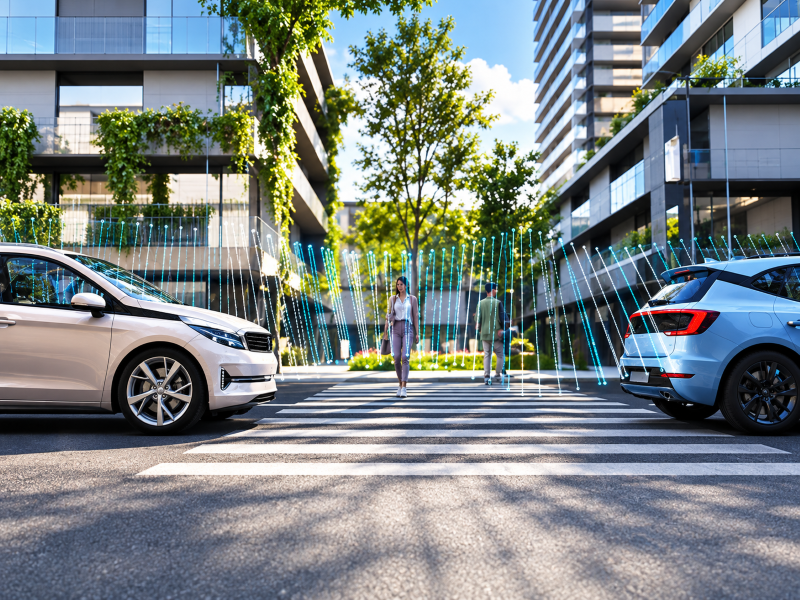
The electric vehicle is no longer just a cleaner alternative to the internal combustion engine. It is becoming a rolling artificial intelligence platform—a machine that perceives, learns, and adapts in real time. The convergence of electrification and AI is redefining what a car can be, transforming it from a mode of transport into an intelligent companion on the road.
AI-Powered Driving Assistance
Modern EVs are equipped with sensor suites—cameras, radar, ultrasonic sensors, and increasingly lidar—that feed continuous streams of data into onboard AI processors. These systems enable Level 2 and Level 2+ autonomy, including adaptive cruise control, lane centering, automatic lane changes, and highway pilot. Unlike earlier rule-based systems, today's AI models learn from fleet-wide data, improving performance with every mile driven. Chinese automakers and global brands alike are racing to deliver increasingly capable hands-free driving experiences.
The Self-Learning Cabin
Inside the vehicle, AI is reshaping the cabin experience. Voice assistants now understand natural language, recognize individual speakers, and execute complex commands—from adjusting climate to planning routes with charging stops. Driver monitoring systems track attention and fatigue, issuing alerts or adjusting cabin conditions accordingly. Over-the-air updates continuously refine these capabilities, meaning the car gets smarter over time.
Predictive Intelligence and Energy Management
AI also plays a critical role in EV-specific functions. Predictive range algorithms analyze driving style, terrain, weather, and traffic to deliver accurate range estimates. Intelligent energy management optimizes battery usage, thermal conditions, and charging schedules. Some systems can even pre-condition the battery ahead of a fast-charging stop, reducing charging time and extending battery life.
Challenges and the Road Ahead
The rise of AI-driven EVs brings challenges. Data privacy and cybersecurity demand robust frameworks. Regulatory approval for higher autonomy levels varies across markets. Consumer trust must be earned through transparency and demonstrated reliability. Yet the trajectory is clear: AI is not an add-on feature but the core architecture of the next-generation vehicle. The smart EV is not coming—it is already here.








 SUV
SUV +86-532-8579-6999
 +86-532-8579-6999
 +86-178-6290-1191
 Suite 2504, Block A, China Railway Qingdao Center, No. 8 Hong Kong Middle Road, Shinan District, Qingdao, Shandong Province, China